
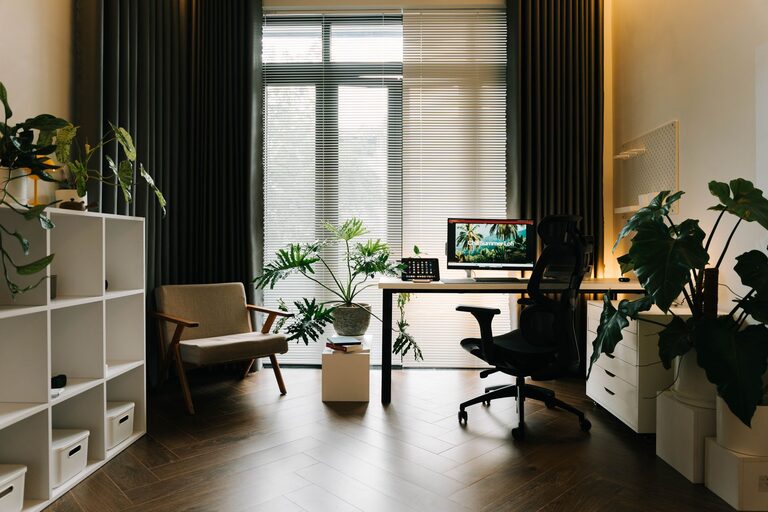
Creating a home office that is both comfortable and productive is essential for anyone working remotely or running a business from home. A well-designed space helps reduce distractions, maintain focus, and support your overall well-being. Whether you’re setting up a new office or tweaking an existing one, these tips will guide you to create an environment that enhances your workday.
Choose the Right Location
Your home office should be set in a quiet, low-traffic area of your home. Consider the following:
– Natural light: Try to position your desk near a window to benefit from daylight. Natural light can improve mood and reduce eye strain.
– Privacy: Avoid spaces where family or roommates frequently pass through.
– Space: Ensure there’s enough room for your desk, chair, and storage without feeling cramped.
Even a small nook can become a productive workspace with the right setup.
Invest in Ergonomic Furniture
Comfort is key when sitting for long hours. Ergonomic furniture supports posture and reduces the risk of discomfort or injury.
– Ergonomic chair: Select a chair with adjustable height, lumbar support, and comfortable cushioning.
– Desk height: Your desk should allow your elbows to rest comfortably at a 90-degree angle.
– Monitor placement: Place your computer screen at eye level, about 20-30 inches away, to avoid neck strain.
If a traditional desk and chair aren’t an option, consider alternatives like standing desks or adjustable workstations to switch positions throughout the day.
Organize with Purpose
Clutter can distract you and make it harder to concentrate. By organizing your space thoughtfully, you create a clear, inviting workspace.
– Storage solutions: Use shelves, filing cabinets, or desk organizers to keep supplies and documents tidy.
– Cable management: Use clips, ties, or cable boxes to avoid tangled cords.
– Daily clean-up: Spend a few minutes at the end of each day putting things away to start fresh tomorrow.
Having only the essential items on your desk keeps your mind focused on work.
Optimize Lighting
Good lighting reduces eye strain and creates a pleasant atmosphere.
– Combination lighting: Use a mix of natural light and artificial light sources, such as desk lamps and overhead fixtures.
– Avoid glare: Position screens and lights to minimize glare on your monitor.
– Warm light: Choose lights with a warm color temperature to create a cozy, inviting environment, especially in the evening.
Adjust lighting as needed throughout the day to match your tasks and natural rhythms.
Minimize Distractions
A distraction-free environment helps maintain focus and increases productivity.
– Sound control: Use noise-canceling headphones or play soft instrumental music to block background noise.
– Separate work and personal space: Keep work materials confined to your office area to avoid mixing work and leisure mentally.
– Set boundaries: Communicate your working hours and ask for quiet during those times to family or housemates.
You can also personalize your space subtly with items that motivate you without cluttering your desk.
Add Personal Touches
While functionality is critical, personalizing your home office fosters comfort and motivation.
– Plants: Indoor plants can improve air quality and add a refreshing touch of nature.
– Art and photos: Display art or pictures that inspire you or make you happy.
– Comfort items: Include a cozy throw blanket, a comfortable cushion, or a favorite mug for drinks.
A welcoming workspace encourages you to spend time there and enjoy your work.
Create a Comfortable Climate
Temperature and air quality impact your comfort and ability to concentrate.
– Ventilation: Keep your office well-ventilated with fresh air to stay alert.
– Temperature control: Use fans, heaters, or air conditioning to maintain a comfortable temperature.
– Humidity: A humidifier or dehumidifier may be helpful if your space tends to be too dry or too humid.
Dress in layers and keep water nearby to stay comfortable throughout the day.
Establish a Routine and Take Breaks
A comfortable environment is one that suits your work style and promotes healthy habits.
– Set work hours: Create a schedule to start and end your workday, helping maintain work-life balance.
– Take short breaks: Stand, stretch, or walk around every hour to reduce fatigue.
– Change postures: Alternate between sitting and standing if possible.
Routine and movement contribute to long-term comfort and productivity.
—
Creating a home office that works for you is a blend of good planning, ergonomic choices, and personal expression. By following these tips, you can build a space that helps you stay comfortable, focused, and productive day after day. Remember, your home office is not just a place to work—it’s a place to thrive.